
A finished interior design project needs images that explain more than the size of each room. The photography should reveal the decisions that give the space its identity: layout, materials, lighting, bespoke elements and the relationship between one area and the next.
Someone searching for an interior photographer in Marbella will often need content for a design studio portfolio, a renovation company website, editorial publication, residential development or brand communication. This is different from documenting a home for a quick property listing. Every composition needs to respect the project and help viewers understand why it works.
Property photography and interior photography have different priorities
A real estate shoot needs to explain the complete property clearly: which spaces it contains, how they connect and what its main selling points are. Interior photography gives greater attention to the design intent, combination of materials, furniture, lighting and details that distinguish the completed work.
The two approaches can work together. A completed villa may need one gallery for marketing the property and a more considered selection for the interior designer, architect or contractor to present in their own portfolio. Defining both uses before the shoot avoids ending up with many images that serve neither purpose particularly well.
The brief should identify the decisions worth showing
Before photographing, I need to understand who will use the images and which parts of the project carry the most value. This does not require a complicated document. A short conversation and a few references are normally enough to understand the assignment.
- Authorship and collaborators: which studio, architect, contractor, brand or supplier should be represented.
- Purpose: portfolio, website, social media, press, awards, property marketing or a presentation to the developer.
- Key decisions: layout, bespoke joinery, stone, lighting, kitchen, furniture, landscaping or the connection between indoors and outdoors.
- Formats: horizontal images for websites and publications, vertical compositions for social media and details that communicate materials.
- Ideal date: when the work is complete, clean and fully dressed, before everyday use changes the space.
A strong series combines context, spaces and details
A useful interior shoot cannot rely only on wide-angle views. Establishing photographs explain the layout, but they need medium compositions and details that show the design work. A balanced sequence normally includes a lead image, the key rooms, transitions between spaces, important materials and a selected group of closer views.
The lead image should summarise the project without trying to show everything at once. It might feature a bespoke kitchen, a living room connected to the garden or a composition where architecture, furniture and light work together. The remaining photographs develop that first impression and allow viewers to understand the whole scheme.
Lines, materials and colour need to remain believable
In interior photography, weak technical control can change the way the design itself is perceived. Leaning verticals distract from the architecture, an excessively wide lens distorts furniture and aggressive editing alters tones and textures that were selected deliberately.
My approach preserves natural proportions, careful lines and consistent colour. Editing balances the light and removes minor visual distractions, but it does not replace materials or turn the space into something else. The final images should be attractive and still recognisable to the people who designed the project.
Preparation does not mean removing all personality
An interior should be clean, organised and complete, but it does not need to feel empty. Books, textiles, art, plants and selected objects can explain scale and show how the space is intended to be used. The priority is to remove items that compete with the design: packaging, visible cables, cleaning products, labels, remote controls, paperwork and temporary construction materials.
Cushions, curtains, chairs, cabinet doors and light fittings should also be checked before the shoot begins. Correcting these details in the room is more natural and efficient than attempting to rebuild them later in editing.
The right time depends on orientation and design character
There is no single type of light that suits every interior. A Mediterranean home opening towards a terrace may work best when daylight explains that relationship. A project where decorative lighting is central may need a different time of day or a careful combination of natural and artificial light.
Before setting the schedule, it helps to know the orientation, window sizes, views and priority rooms. On larger projects, planning the sequence around the movement of the sun creates a more consistent set and avoids photographing each room at its least flattering moment.
A real interior project photographed in Estepona
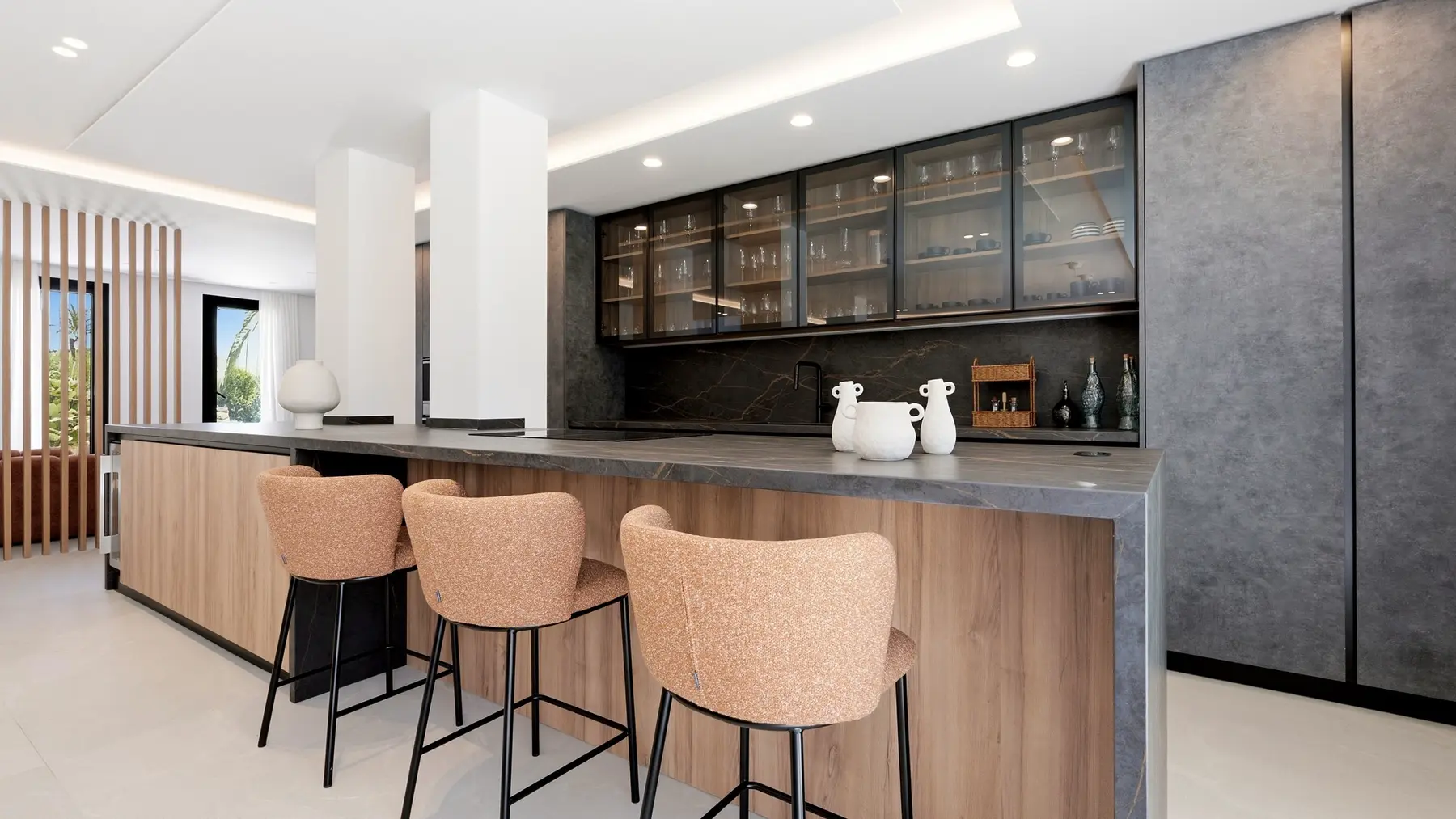
At a contemporary villa I photographed in Estepona, the assignment was not simply to show a collection of rooms. The kitchen combined timber, dark surfaces, glazed cabinetry and a substantial island, while the living room opened towards a terrace, tropical garden and pool.
The sequence was designed to preserve that continuity. Wide views explain the architecture and its relationship with the outdoors, while more controlled compositions show the materials, furniture and lighting. I photographed and edited every image. The client’s name and exact address remain private.
What files does a studio need after the shoot?
The intended use affects delivery. A website needs sharp, optimised images; a magazine or awards submission may require higher-resolution files; social media works better when vertical compositions are also available. Planning these requirements from the outset makes it possible to leave enough room for different crops without weakening the original composition.
Some projects may also benefit from video, drone coverage or a short vertical piece. These formats are valuable when they add movement, scale or context. They should not be included automatically when a photographic series can communicate the work more effectively.
Interior photography in Marbella and the Costa del Sol
I am Martin Hannus, with more than ten years of experience photographing properties and interiors. I work with interior studios, architects, renovation companies, developers, estate agencies and homeowners in Marbella, Málaga, Mijas, Estepona, Sotogrande and other areas across the Costa del Sol.
For a clear quote, send the location, project type, priority spaces, intended use of the images and approximate date. You can review real work in the HannusFoto portfolio or ask about availability for your finished project.